
Displaying 1-8 of 149
-

In D.C. and Across the Nation, Nursing Provides a Path to Economic Well-Being
Sep 22, 2021
There are so many reasons to choose a nursing career. Nurses work in a wide range of roles and in almost every setting imaginable. They provide care, advance rehabilitation and cure, provide emotional support, advocate for health promotion, and educate patients, families, more
Issues: Building Healthier Communities Increasing Diversity in Nursing Transforming Nursing Education
-
The Most Salient Issue of our Time
Sep 15, 2021
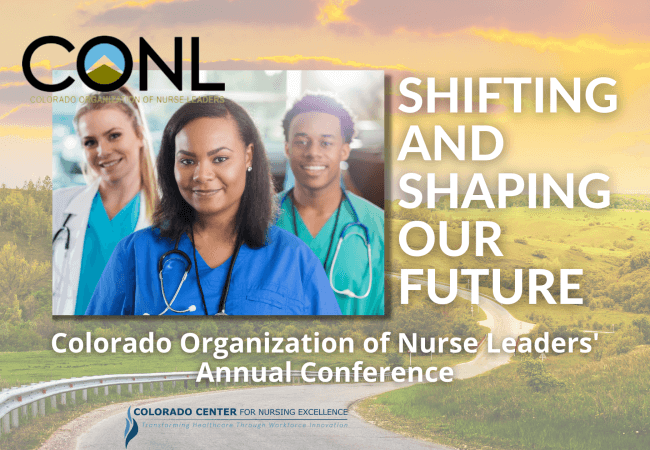
The Colorado Center for Nursing Excellence is pleased to share this information from the Colorado Organization of Nurse Leaders (CONL) for their annual fall conference! This three-day virtual event will be held Tuesday evenings from 4:30 pm – 6:00 pm MST. SHIFTING AND more
Issues: Improving Health Equity Increasing Diversity in Nursing Transforming Nursing Education Location: Colorado
-
Help the American Nurses Foundation Reimagine the Future of Nursing
Aug 19, 2021
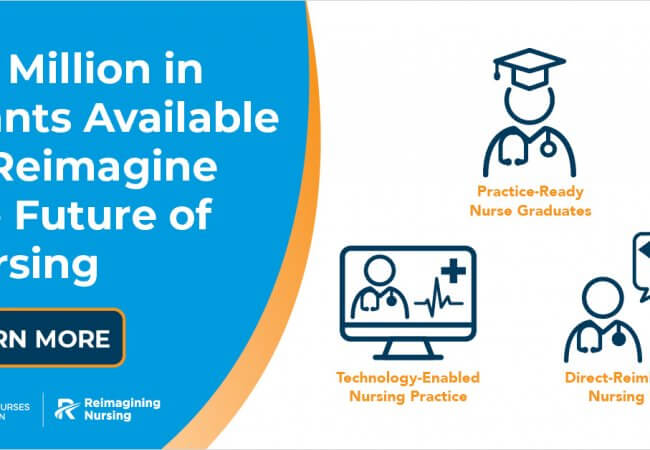
Nurses deliver high-quality, accessible, and equitable care for all Americans. Many health care experts and advocates lament that the current health care system under-develops, under-utilizes, and under-appreciates nurses. The American Nurses Foundation is committed to more
Issues: Transforming Nursing Education
-

Transforming nursing education to achieve health equity
May 18, 2021
Addressing patients’ unmet social needs has always been an aspect of the practice of nursing. But to meet today’s health equity challenges, nursing schools will need to embrace some bold new ideas and uncomfortable conversations. The new report from the National Academy more
Issues: Building Healthier Communities Transforming Nursing Education Location: National
-
In Dark Times, NAM Study Sees a Bright Future for Nursing
May 11, 2021
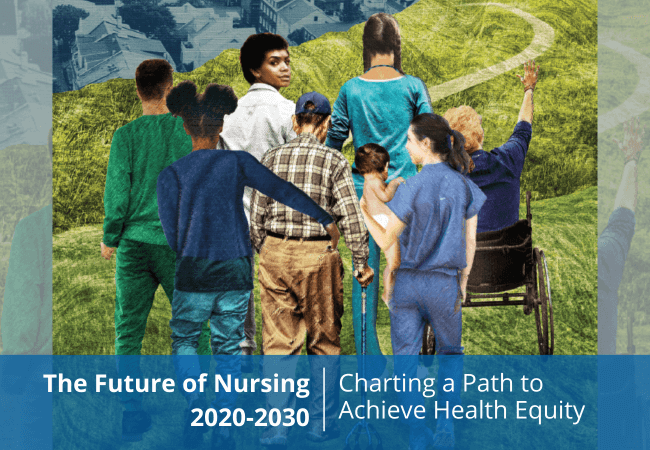
Earlier today, the National Academy of Medicine (NAM) released its eagerly awaited report, The Future of Nursing 2020-2030: Charting a Path to Achieve Health Equity. The report’s dedication to “nurses around the world who paid the ultimate price of caring for people more
Issues: Building Healthier Communities Improving Access to Care Improving Health Equity Increasing Diversity in Nursing Promoting Nursing Leadership Transforming Nursing Education
-
Looking back to look forward
Feb 23, 2021
Nurses, nurse leaders, nurse champions and allies from across the country will virtually gather Wednesday to reflect on the profession’s achievements since the release of the 2010 Institute of Medicine report The Future of Nursing: Leading Change, Advancing Health. More more
Issues: Building Healthier Communities Collecting Workforce Data Fostering Interprofessional Collaboration Improving Access to Care Improving Health Equity Increasing Diversity in Nursing Promoting Nursing Leadership Transforming Nursing Education
-

A Heartfelt Thank You
Jan 14, 2021
First, a heartfelt thank you. Thank you for the contributions that we know you have made to your family, your community, the profession, and more, during a year of enormous challenges that include sickness in our ranks, burnout, grief, and worse. The pandemic has tested the more
Issues: Building Healthier Communities Collecting Workforce Data Fostering Interprofessional Collaboration Improving Access to Care Increasing Diversity in Nursing Promoting Nursing Leadership Transforming Nursing Education
-
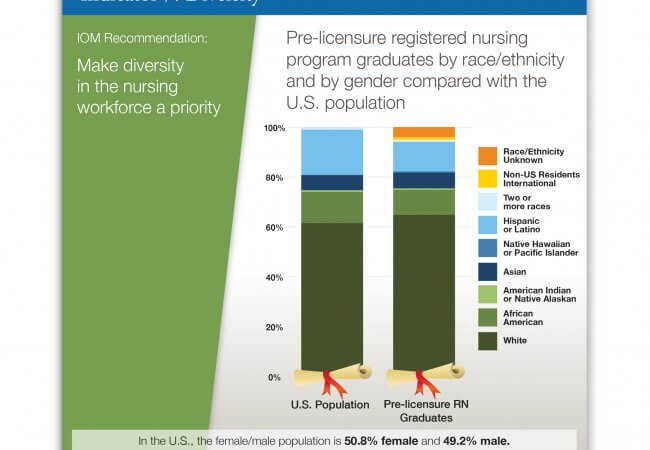
Nurse Education and Diversity on Rise, Latest Figures Show
Oct 13, 2020
Since its beginning in 2010, The Future of Nursing: Campaign for Action has tracked progress made by its state-based Action Coalitions, nurses, and supporters as we continue to implement recommendations made by the Institute of Medicine (IOM; now the National Academy of more
Issues: Building Healthier Communities Collecting Workforce Data Fostering Interprofessional Collaboration Improving Access to Care Increasing Diversity in Nursing Promoting Nursing Leadership Transforming Nursing Education